

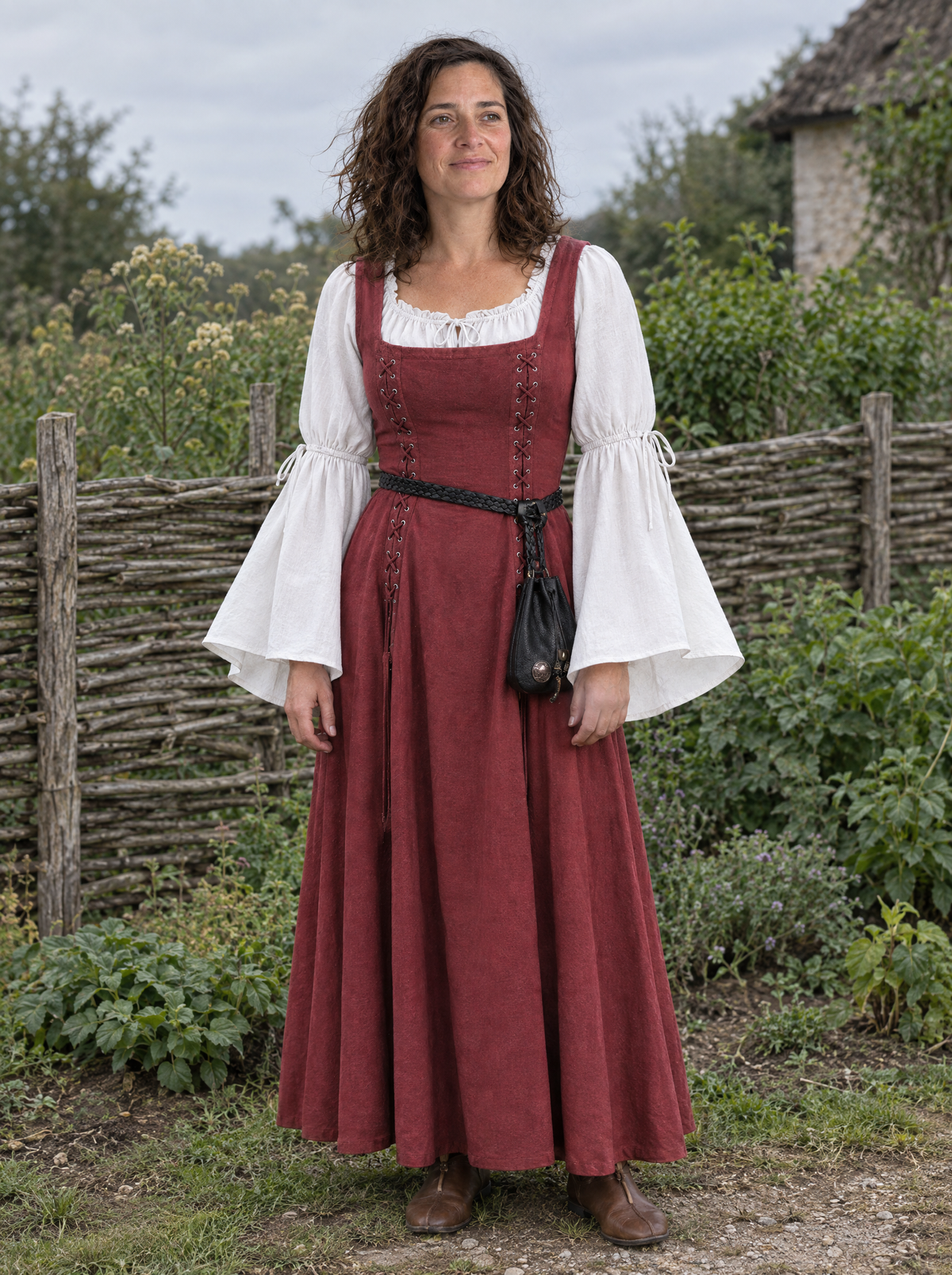
You don't need a perfect historical costume to enjoy a Renaissance faire. Most visitors wear simple “garb”: a loose shirt, one main layer, a belt and comfortable boots. This guide shows you how to put that together, what to skip, and how to stay comfortable from opening time to the last show.
In short
- Build the outfit in layers: a shirt or blouse, a main layer, trousers or a skirt, a belt and pouch, then good footwear.
- Comfort comes first. You will walk and stand for six to eight hours, often in full sun.
- Cotton, linen blends and ramie breathe best on warm days. Save velvet for cool ones.
- Faires mix eras and fantasy, so a Viking, elf or ranger is as welcome as a Tudor noble.
Do you have to dress up for a Renaissance faire?
No. Costumes are optional at almost every faire, and plenty of visitors come in everyday clothes. Dressing up is a big part of the fun, though. In faire talk your costume is your “garb”, and even three pieces, such as a loose shirt, a belt and a pouch, are enough to feel part of the day.
The easy outfit formula: five layers
Almost every good faire outfit follows the same pattern. Start with one piece from each layer, then add more over time.
- A base layer. A loose shirt for men, or a blouse with full sleeves for women. White and off-white go with everything. Try the Renaissance Shirt with Laced Sleeves or the Flared-Sleeve Renaissance Blouse.
- A main layer. This gives the outfit its character: a tunic, a vest, a laced dress or a bodice. See all tunics and shirts and dresses and gowns.
- Trousers or a skirt. Loose trousers tucked into boots, or a long skirt that clears the ground. Browse trousers and skirts.
- A belt and a pouch. A belt pulls the outfit together, and a pouch keeps your phone, cards and keys at hand, because most garb has no pockets. See belts and pouches.
- Footwear and finishing pieces. Boots or plain leather-look shoes, then a cloak, bracers or a circlet if you want more. See footwear and accessories.

Outfit ideas for women
The classic look is a white blouse under a laced dress or bodice, with a long skirt. A Square-Neck Lace-Up Renaissance Dress over a full-sleeved blouse is the quickest way there. For a softer folk style, the Full-Skirt Dress and Laced Vest works on its own. Finish with a thin leather belt and a small drawstring pouch. For seven complete looks, read Renaissance faire outfits for women.
Outfit ideas for men
Start with a loose shirt, add a vest or tunic, and tuck your trousers into boots. The Lace-Up Hunter Vest over a white shirt reads as a merchant, hunter or traveller. A Cotton Viking Tunic with a wide belt reads as a Norse visitor. More in Renaissance faire outfits for men.
Pick a character (if you want one)
Renaissance faires are a melting pot. Next to Tudor nobles you will see Vikings, elves, knights, rangers and wizards. Choosing a character makes shopping easier, because it tells you which pieces to look for.
- Peasant or tavern keeper: blouse, laced dress or vest, plain skirt. Peasant outfit guide
- Ranger: hooded cloak, vest, bracers, utility belt. Ranger outfit guide
- Viking: tunic, fur-look cape, wide belt, embossed bracers. Viking outfit guide
- Elf: greens and earth tones, a hood and a circlet. Elf costume guide
- Knight: padded coat, breastplate, helm. Knight costume guide
Twelve characters, from bard to barbarian, are in Renaissance faire outfit ideas.
Stay comfortable all day
- Shoes: wear boots or shoes you have already walked in. New footwear and a full day on dirt paths do not mix. See the medieval boots guide.
- Fabric: cotton, linen blends and ramie breathe well. Velvet cloaks and fur-look capes look great but are warm.
- Hems: skirts and cloaks that drag on the ground pick up dust and mud. Ankle length is easiest to live in.
- Layers: mornings can be cool and afternoons hot. A cloak or vest you can take off helps.
- Pockets: most garb has none, so wear a pouch on your belt.
Going on a hot day? Read how to stay cool at a summer faire. Cold or wet forecast? Read what to wear when it's cold or rainy.
What to leave at home
- Real or sharp weapons. Most faires have strict rules, and many ask that props are peace-tied. Check your faire's website before you go.
- Brand-new shoes. Break them in first.
- Long trains and floor-sweeping sleeves on a busy, dusty day.
- Anything you can't sit down in. You will want a seat at the joust.
How to get the size right
Costume sizes vary between makers, so go by measurements, not by the letter on the label. Measure your chest, waist and hips, compare them with the size chart on each product page, and if you are between two sizes or want to layer underneath, take the larger one. The measuring guide shows you how.
Questions people ask
Can I wear normal clothes to a Renaissance faire?
Yes. Costumes are optional. Many people start with jeans and a loose white shirt, then add a belt, a pouch or a cloak at the next faire.
What colours should I wear?
Earth tones such as brown, green, cream and dark red look natural outdoors and mix well. Black suits rogue and dark fantasy looks.
Is it a Renaissance “fair” or “faire”?
Both spellings are used. “Faire” is the old-fashioned spelling most events use in their names, and it means the same thing.


