

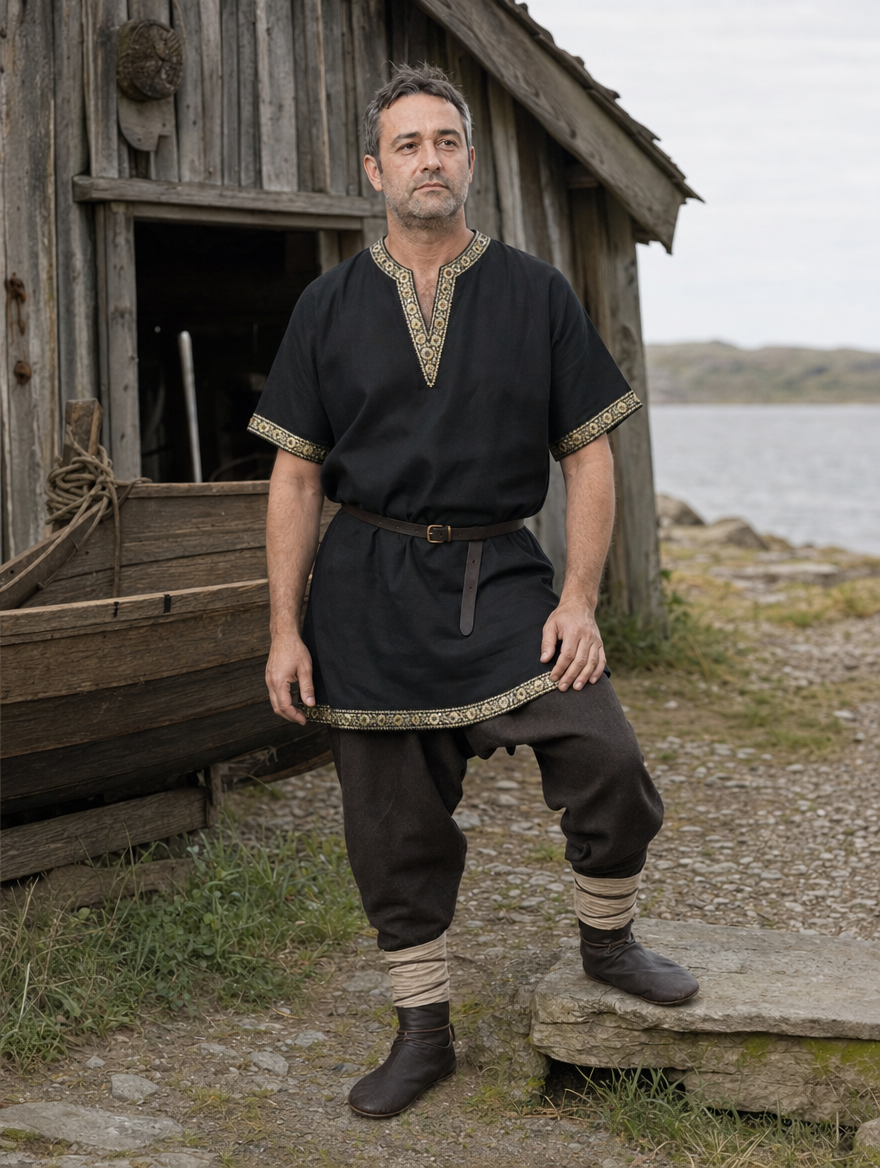
The SCA, the Society for Creative Anachronism, is a worldwide group that recreates life before 1600: tournaments, feasts, dance, archery and crafts. You don't need perfect clothes to join in. Here's what “garb” means, what to wear to your first event, and how to build from there.
In short
- Garb is the SCA word for period clothing.
- The rule for newcomers: make an attempt at pre-17th-century clothing.
- Many local groups lend garb to newcomers.
- A plain tunic, a belt and simple shoes is a good start.
What the SCA is
The SCA began at a backyard party in Berkeley, California, in 1966. Today it is organised into about 20 “kingdoms” around the world. Members recreate the arts, skills and pastimes of the Middle Ages and Renaissance, roughly 600 to 1600, mainly in Europe. Many take on a persona: a person who could have lived in a chosen time and place.
The rule: make an attempt
SCA events ask everyone to make an attempt at clothing from before the 17th century, and to keep obviously modern things out of sight. Nobody expects museum-quality garb at your first event. A simple tunic or long gown with no logos counts.
Borrow before you buy
Most local SCA groups have an officer who looks after newcomers, often called the chatelaine or hospitaller. Many also run a loaner programme, often called Gold Key, with garb in different sizes and sometimes feast gear: a plate, bowl and cup for the feast. Write to your local group before your first event and ask.
The easiest first outfits
- The T-tunic, for anyone: the basic medieval garment, worn by men and women for centuries. Knee length over trousers, or ankle length as a gown, belted at the waist. Try the Short-Sleeve V-Neck Tunic or the Cotton Viking Tunic with the Laced Trousers with Ankle Ties.
- Early medieval and Norse: a tunic, trousers, a leather belt with a pouch and a cloak. Add the Hooded Ranger Cloak for cold evenings.
- A long gown: a long, plain dress with a belt, and a veil or simple headband. Keep the colour solid and the shape simple.
- The 1500s: for women, a white smock or blouse, a laced bodice or dress and a full skirt. For men, a full shirt, a vest or doublet and breeches. The Renaissance Shirt with Laced Sleeves and the Square-Neck Lace-Up Renaissance Dress suit this look.

Small things that help
- Fabric: linen, cotton and wool look right and are kinder near cooking fires. Shiny satin and printed patterns look modern. See our fabric guide.
- Belt and pouch: a plain leather belt and a pouch hide your phone, keys and cards. The Leather Knot Belt with Ring and the Leather Drawstring Coin Pouch are real leather.
- Shoes: plain dark boots or shoes with no visible logos. Many newcomers start with simple modern boots.
- Head: a headband, veil or hood finishes the look.
What not to wear
Some regalia is reserved in the SCA. A white belt, a plain chain with nothing hanging from it and spurs belong to knights, so choose any belt colour but white. Crowns, tiaras and coronets are for royalty and titled members. When in doubt, ask your group's newcomer officer.
A note on our clothes
Our clothes are made for faires, LARP and costume events. Simple pieces like a plain tunic, trousers, a cloak and a leather belt make a good first attempt. As you get deeper into the SCA, you may want garb made for your persona's exact time and place, and the SCA's arts and sciences classes can teach you how to sew it.
A simple first-event kit
Questions people ask
What does garb mean?
Garb is the word SCA members, and many faire-goers, use for period or costume clothing.
Is the SCA the same as LARP?
No. The SCA recreates real history rather than playing a fantasy story with game rules. Some people enjoy both. See what is LARP?
Can I wear my Renaissance faire outfit to an SCA event?
Often, yes, as a first attempt, if its style comes from before 1600 and it has no modern details. Fantasy pieces like elf ears or printed robes are best kept for faires and LARP.


