

A Renaissance faire is part theatre, part market and part village fete. You walk through a gate into a make-believe town full of performers, craft stalls, food and music, and for a day you are part of the story. If it's your first time, this guide covers what to expect, what to wear and how to get the most out of the day.
In short
- Plan for a full day on your feet, mostly outdoors.
- Dress up as much or as little as you like. Costumes are optional.
- Look at the show schedule early and pick the two or three you don't want to miss.
- Play along with the performers. It makes the day better for everyone.
What happens at a Renaissance faire?
Every faire is different, but most have the same ingredients:
- Stages and street shows: music, comedy, magic, sword fights and storytellers, often running all day.
- Jousting: many faires have a tournament arena with knights on horseback. It is usually the biggest crowd of the day.
- A market: stalls selling leatherwork, jewellery, pottery, clothing and handmade goods, often with makers working in front of you.
- Food and drink: roast meats, pies, sweets and ale. The giant turkey leg is a tradition at many American faires.
- Games: archery, axe throwing and games of skill at some events.
- Themed weekends: Celtic, fantasy or Viking weekends, when more visitors dress up.
What to wear to your first faire
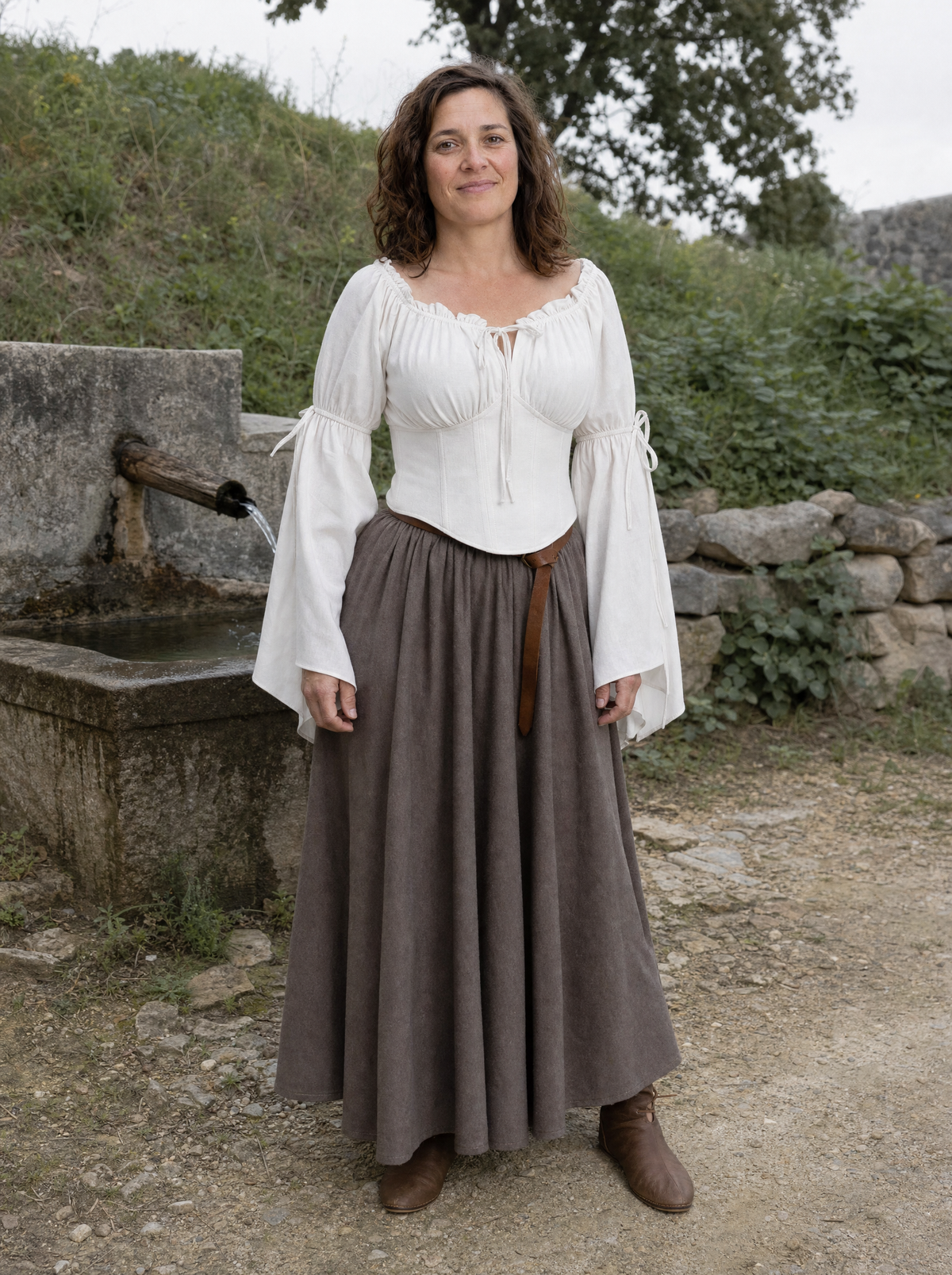
You can go in everyday clothes. If you want to dress up, three pieces are enough to feel part of it: a loose shirt or blouse, a belt with a pouch, and comfortable boots. From there, add a laced dress, a vest, a cloak or bracers. Our full guide, what to wear to a Renaissance faire, walks you through it layer by layer.

How to plan the day
- Arrive early. Parking is easier, queues are shorter and the morning is cooler.
- Get the map and the schedule. Circle the joust and two or three shows.
- Eat a little early or a little late. Food queues peak around midday.
- Sit down when you can. Shows are a good chance to rest your feet.
- Shop at the end. Then you aren't carrying purchases all day. Ask stalls if they can hold items for you.
Faire etiquette in five lines
- Play along. If a performer calls you “my lady” or “good sir”, answer in kind. A loud “Huzzah!” is always welcome.
- Tip the performers. Many street acts pass the hat at the end of a show.
- Ask before you photograph other visitors. Most people in costume are happy to pose, but ask first.
- Hands off other people's garb and props. Some of it took months to make.
- Follow the weapons rules. Many faires ask that props are peace-tied, and real blades are often not allowed.
More faire words, from “garb” to “playtron”, are in faire words and etiquette.
What to bring
Water, sun cover, a phone with charge, a card and a little cash for small stalls and tips, and shoes you have already walked in. A belt pouch keeps it all at hand. The full list is in what to bring to a Renaissance faire.
Questions people ask
How long do people stay at a Renaissance faire?
Most visitors stay four to eight hours. If you want to see the joust and several shows, plan for the whole day.
Is it fine to go on my own?
Yes. Faires are friendly places, and shows and performers make it easy to enjoy the day alone.
Are Renaissance faires good for children?
Most are family events, with games, animals and shows for children. Check your faire's website for age-friendly times. Our guide to kids' faire outfits helps with dressing them.


